My son turned three weeks old yesterday. The sense of ease and rest that comes with a newborn in the house is slowly waking into the reality of another soul coming into existence. In those first three weeks a baby transforms from a fetus to a tiny human being, its digestive system engages for the first time, its lungs, its airways, all begin to spring into action.
I find it beautiful and tragic at the same time. The world is of course simultaneously a beautiful and a tragic place and here is someone new who needs to learn both sides of it. Fallen from the garden of the womb, where there is no sound too loud or stimulus too overwhelming, no such thing as air entering the stomach together with the milk, no light to signal the beginning or end of the day, there is an irrevertible loss of peace and innocence and quiet that must be on some level traumatic.
But the eyes also begin to reflect wonder. They can see now: that new and terrifying light is also responsible for reflecting back the faces of family, the colours of the universe. Sounds now enter the ear directly, unmuffled by amniotic fluid. There is every experience before you, awaiting.
It has been an intense few weeks. I am on paternity leave for another couple of weeks and have been experiencing the tremendously meaningful experience of watching my son emerge from his cocoon, interspersed with moments of boredom that I have not experienced for a very long time. The baby sleeps, the house is in order, and there is nothing for me to do but sit with my own thoughts. Of course I decided to take on ambitious projects: this new blog, reading several books at the same time, purchasing a house. It has all felt a bit too much for the last couple of days, and I have not been able to find the time for my morning walks which have grounded me for the past few months.
This morning I did manage to get out for a walk though, only a week since last time but the whole landscape had changed. Blossoms have given way to vibrant greenery. I felt the urge to write something for the first time in a few days and hurried home quickly to get it down. Three weeks is really no time at all.
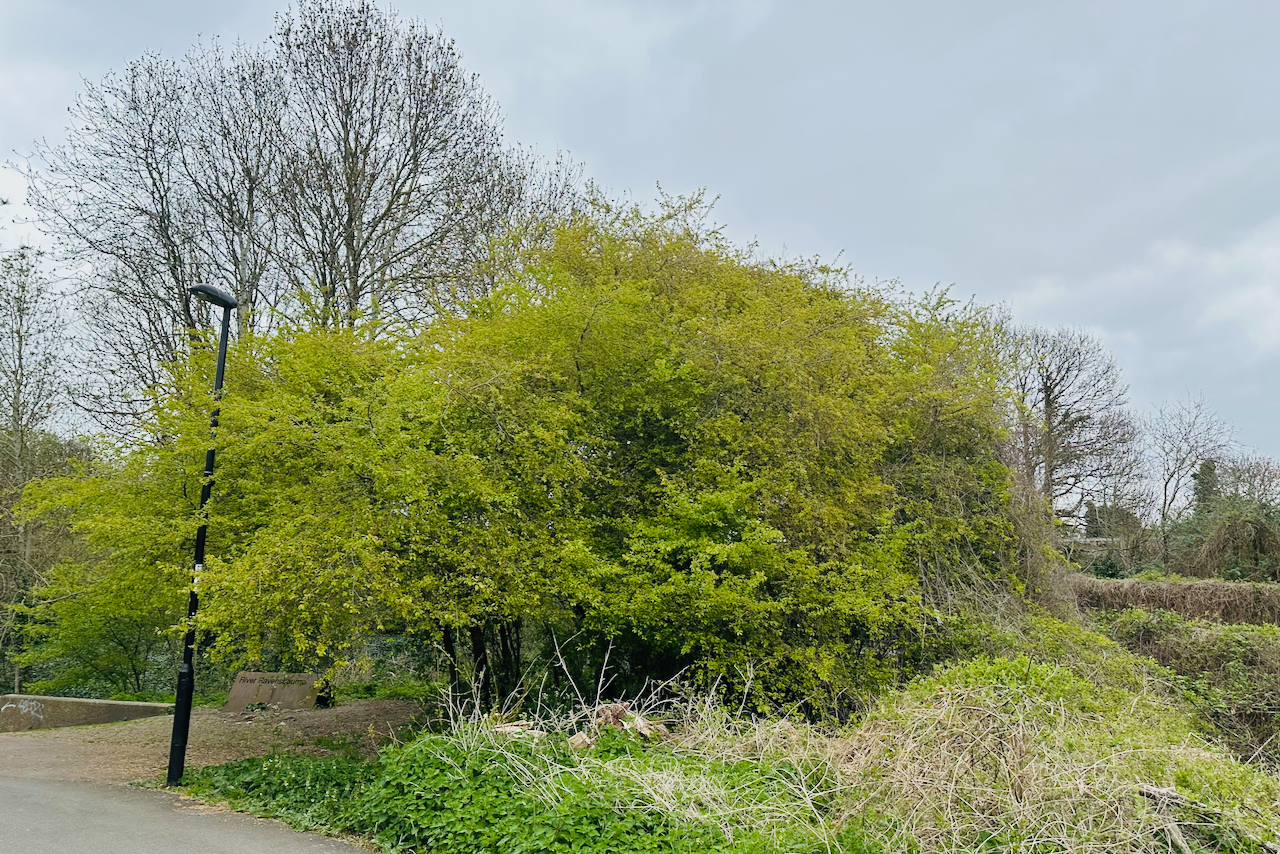
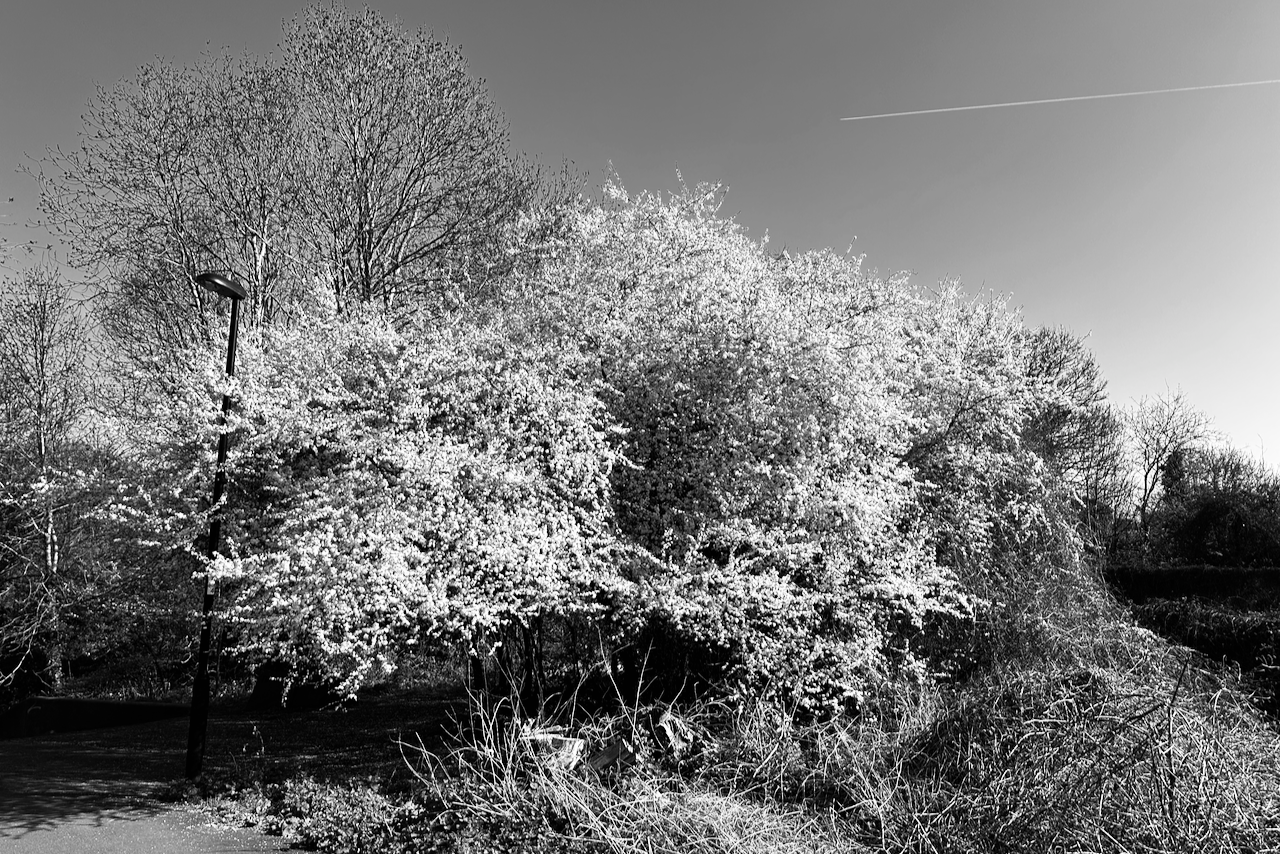
Photograph: The tree in Pool River linear park which was covered with blossoms a few weeks ago.
When I was eleven or twelve, as a birthday present, my Mum bought me a two-day writing workshop at a beautiful English-style country house in the Blue Mountains in New South Wales, Australia, where I grew up. I attended with my friend Lily, who also had her mind set on a career as an author.
The instructor was a lady in her sixties who seemed perfectly happy hosting two precocious youngsters at her writing retreat which was otherwise attended by ‘Mountains folks in their forties and fifties. I remember sitting around a large wooden table reading aloud something I had written and feeling exquisitely adult and literate. We had writing sessions in the sun-drenched garden where I sat with a notebook and a pen, and began almost immediately to experience the unnerving combination of intense excitement, invited by the unlimited possibility of a blank page and a pen, and the overwhelming fear and anxiety that inevitably accompanies it.
The instructor sat with me and offered me consolation and advice. This is a natural feeling, she tried to explain, and you must sit with it. Pass through it. “If you sit long enough, the fire of inspiration will come”, she said.
It’s true, of course, that if you sit long enough with a piece of paper and a pen, you will find something to say (though you may not much like what you do end up saying). This is particularly true if you are sitting somewhere beautiful, like a garden or a world heritage national park, or in the case of my eleven- or twelve-year old self, a garden inside a world heritage national park. But it is tough advice to hear when you’re young and full of the desire to be a writer, but none of the experience of having actually written anything.
I don’t think anything interesting came out of that workshop, but I still remember that advice and those words, and I still hear them every time I sit down at my computer and feel that swelling feeling of infinity radiating at me from the vastness of the empty page.
It is intimidating, and it is much easier to do nothing, to be silent, to read what others have written but only synthesise it in our minds, and to ourselves, than it is to write. Writing it down is the next step, if you are lucky enough that the “fires of inspiration” catch your pen and coax something out before they devour all the oxygen, you will then have something for your efforts, like a lump of carbon left in a calorimeter. Probably you will hate it, and will have to decide: was it better to stay silent than to create this?
Photographs
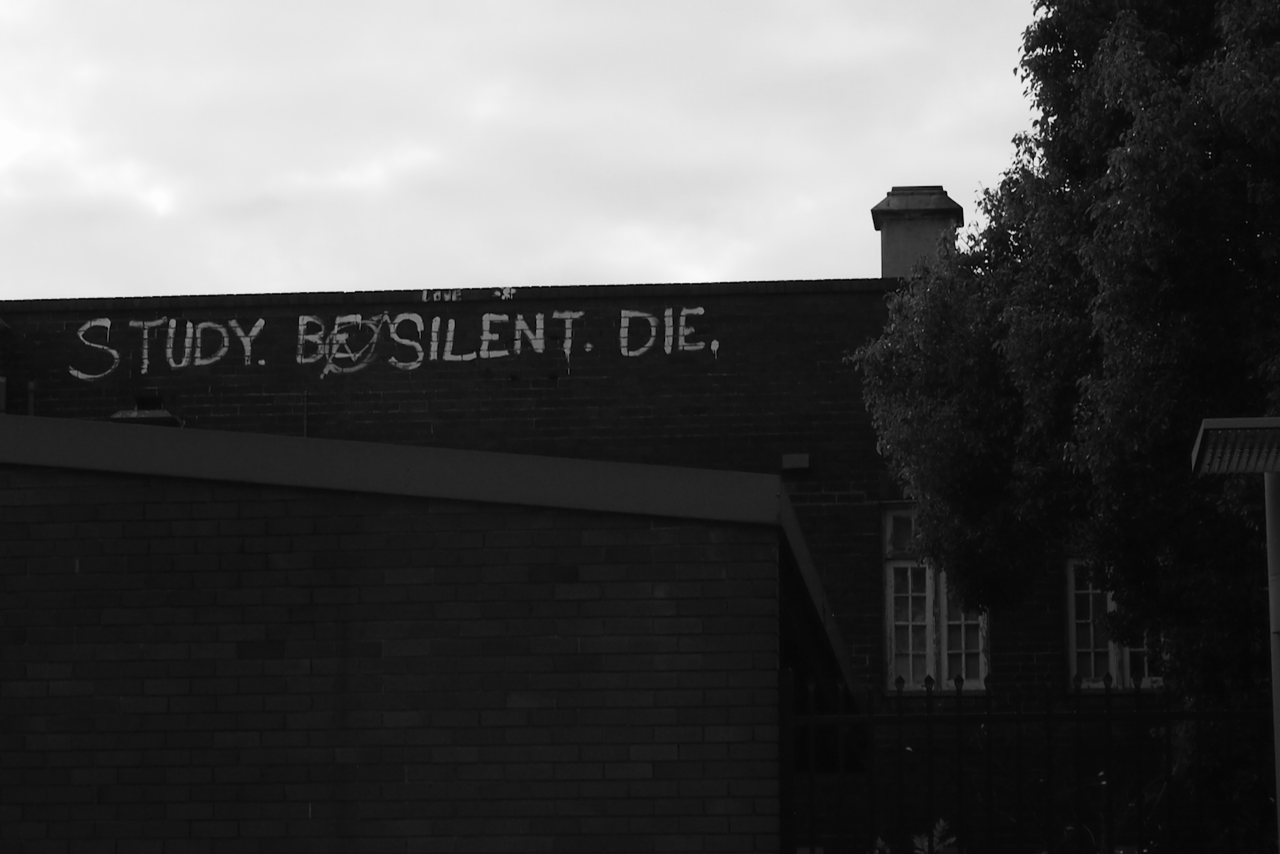
Graffiti at Sydney University, 2014.
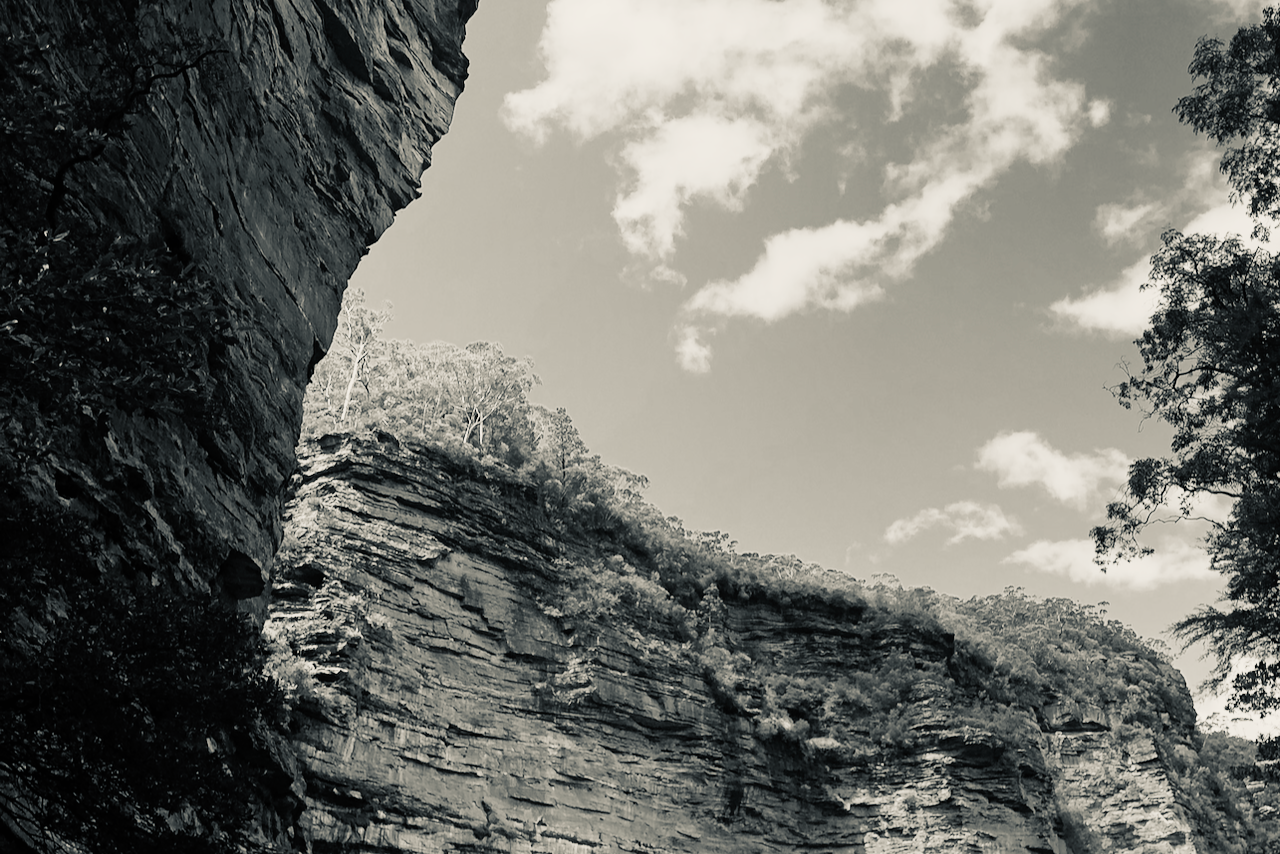
Looking up at the sandstone escarpment from National Pass, near Wentworth Falls in the Blue Mountains, 2019.
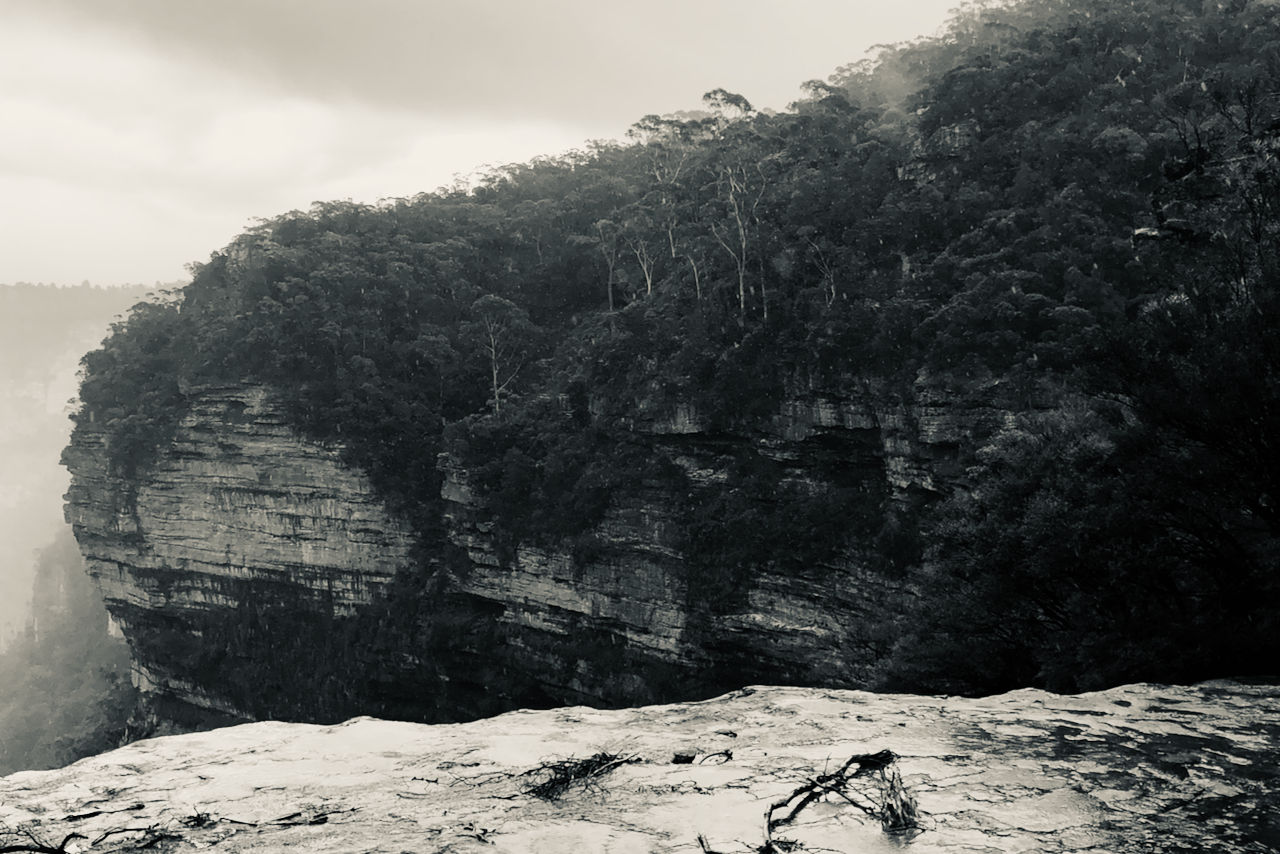
The same cliff, from the top.
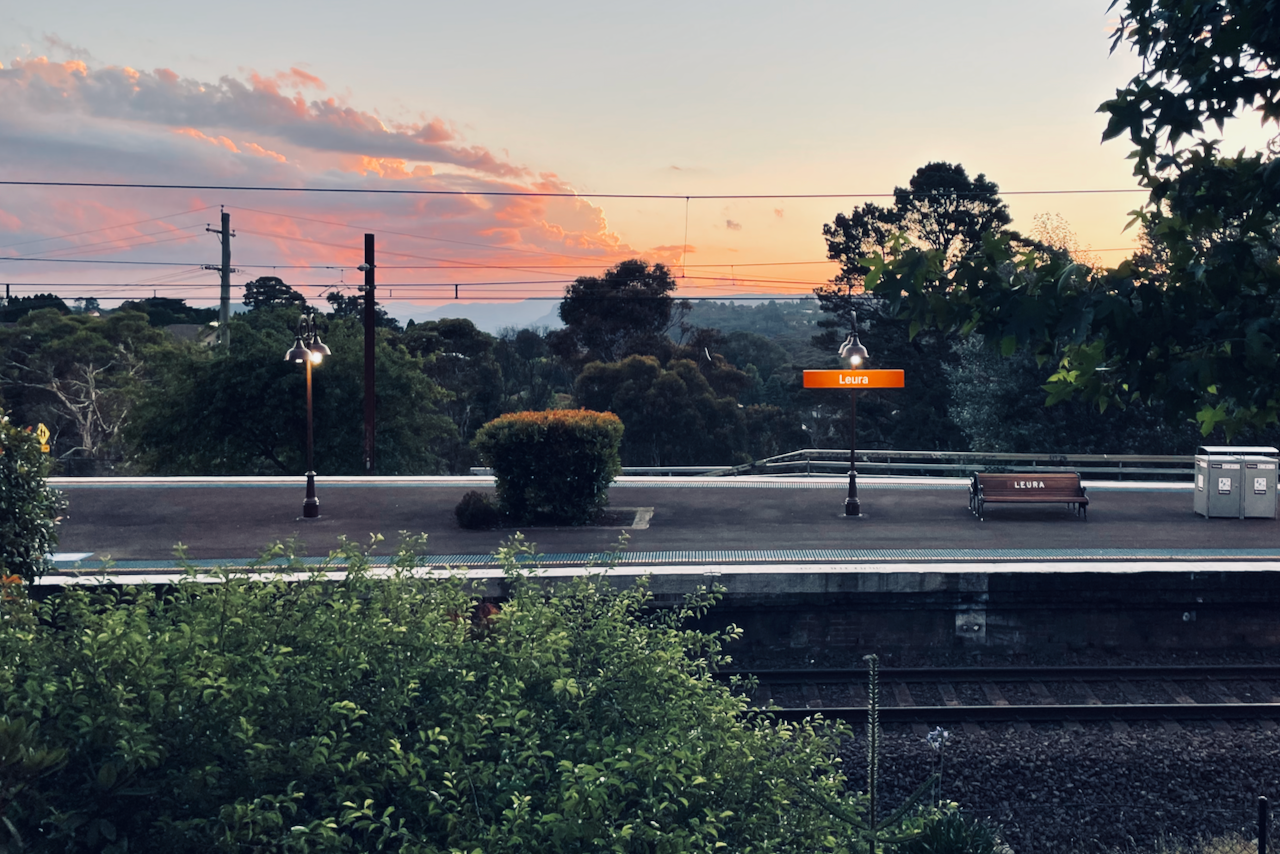
Leura Station, a few hundred metres from the location of my writing retreat, at sunset in 2022.
Absolutely is an album by R&B artist Dijon; I hadn’t heard the album until this week when I found this incredible live performance of the whole album on YouTube. It’s an incredible performance, only 25 minutes long, but filled with a real presence and connection between all of the performers.
Continuing the theme of Scott Alexander’s article I linked to in Tuesdays’s post is this thought-provoking piece from Nolan Lawson which very nicely captures the nail-biting ambiguity and anxiety I feel around using AI tools for software development.
In a similar vein is this note from lauded Dutch computer scientist Edsger W. Dijkstra, whose algorithm for finding the shortest path in a graph is probably one of the most-used in the world, about how natural language will always fall short of capturing the full complexity and precision of problems in engineering, science and mathematics. It rings very true in our current age of AI slop, and it was written in 1978. It’s number 667 of Dijkstra’s “EWD” series of technical notes, on a huge variety of subjects, that he wrote throughout the course of his life, mostly as correspondence with his friends and colleagues: you can find a lot of them here — he wrote 1318 such manuscripts between 1961 and 2002. EWDs are another great inspiration of mine.
This site contains a huge amount of free-to-air television stations to stream from all around the world. Could easily lose many hours with this, something I wish I had had access to as a teenager with time to kill.
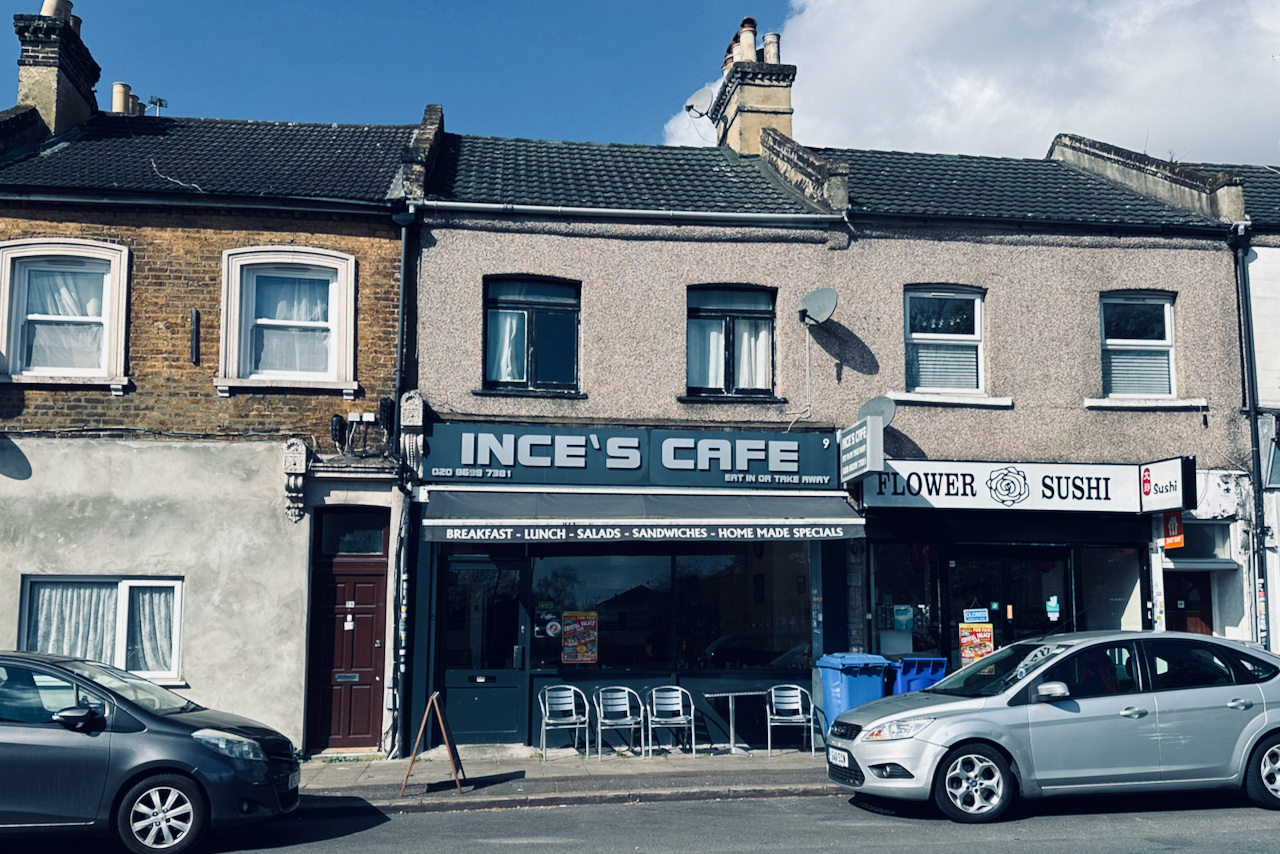
London is still full of British-style cafes, bulwarks against gentrification, serving English breakfasts to workers in their high-viz vests and red-top newspapers. A “cafe” means different things to different segments of the population: to some, it’s a squeaky clean, modern, wood-and-concrete affair, with a cradle of pastries on the counter, Australian-style flat whites, oat-milk friendly. To others, it’s places like Ince’s Cafe on Wastdale Rd in East Forest Hill, an established family business trading in bacon, eggs, sausages, toast and tea for decades.
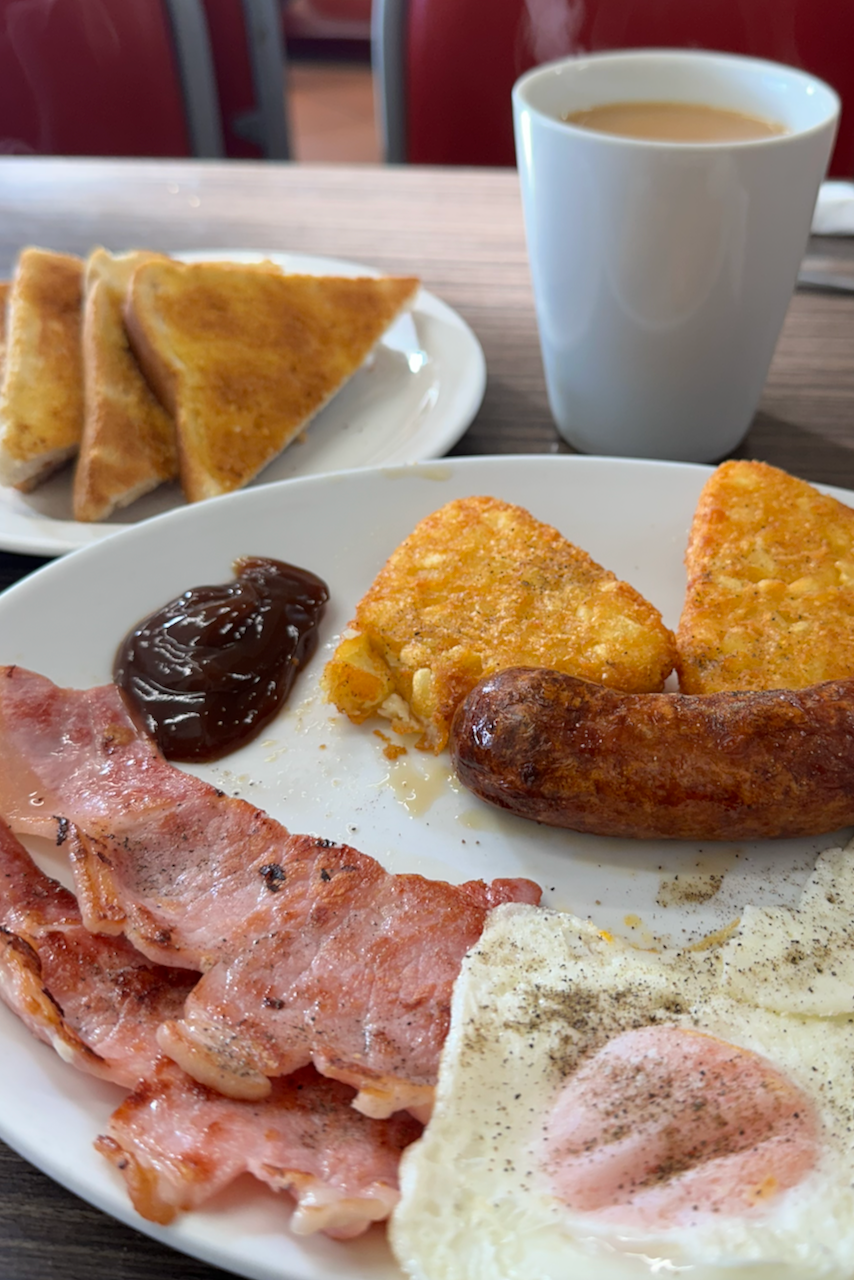
There are no frills and there is no bullshit at Ince’s. The awning counts “salads” amongst its offerings, but I doubt anyone has ever ordered one. You would probably be laughed at if you tried: places like Ince’s often offer “banter”, with the degree of spiciness depending on how well you know the person serving you behind the counter, as a free add-on to your order. You will often be greeted with banter if you offer to pay by card: the machine will be offered to you, but with a look of subtle disappointment, like you haven’t read the secret manual telling you how to behave in places like Ince’s. Cash for breakfast. Mug of tea with milk and sugar. Everything awash in beans (though not in my case, I can’t stand beans so I swap them out for an extra egg).
In England people like to talk about the decline of the pub, and of pub culture. Once the cornerstone of every community, pubs are now closing in record numbers across the country as people turn to different cornerstones, or simply decide to live without any community around them at all. Unsurprisingly, cafes like Ince’s are also on the decline, with more and more people showing preference for breakfasts with fewer than 1000 calories, coffee over tea, card over cash.
It’s not as obvious what the intrinsic cultural value of greasyspoon cafes is, whereas pubs have a long and romantic cultural history (which of course entirely ignores their central role in creating generations of alcoholics and broken homes). I like to think of them as an example of something that is becoming very rare: they do what they say on the packet. Sure, the best fancy cafes are truly great, can be very pleasant places to spend time and money, but the average ones are entirely forgettable and the bad ones are awful. Cafes like Ince’s are unpretentious and simple and the transaction (and the menu) has been the same for decades.
The older you get the more change you are exposed to: this is a tautological statement but it is also profound in its ability to explain why people change as they get older. In a sense, we are changed by all the change we experience, we become weary of it, become desperate for something familiar, something constant, something that isn’t going to change, that will still be there next year. One day Ince’s won’t be on Wastdale Rd anymore: this corner of London is rapidly changing, and soon you won’t be able to find anywhere you can buy your breakfast with those strange metal coins in your pocket.
The best thing I’ve read in the last couple of weeks is this piece by Sally Rooney in the New York Review of Books about professional snooker, and in particular Ronnie O’Sullivan, the undisputed king of the sport. It has some excellent questions about how exactly professional sportspeople perform their wondrous feats, and how much they understand about how they do what they do. Rooney says there isn’t another sport with the same qualities as snooker, but much of what she writes rings very true for me about Test cricket. Replace snooker savant O’Sullivan with leg spinning savant Shane Warne and much of the article would read the same.
Twenty years ago, on March 27, 2005, at the Ether Festival at the Royal Festival Hall in London, Jonny Greenwood and Thom Yorke debuted a new song which they called Arpeggi. I was in my peak Radiohead fanboy phase at this stage, constantly lurking on the now-defunct AtEase fan forum and downloading hundreds of bootlegs, and this sniff of new material, the first since the Amnesiac sessions, was a huge moment. This song kicked off more than a year of new songs being tested out during a tour that ultimately culminated in 2007’s In Rainbows album, which includes a studio version of this song which sounds very different to this skeletal, other-worldly version which will always be the “original” to me.
A couple of weeks ago I made a proof of concept of a web application called GreenChainer, which creates urban routes through green spaces designed for walking, and inspired by the Green Chain Walk in south east London near where I live. You can read a bit more about how and why I made it on my personal webiste.
Scott Alexander has a very thought-provoking piece about the “semantic apocalypse” — the death of meaning — that many fear is coming as a result of the onset of generative AI and the commodification of so many things that humans can create. There’s lots of interesting comparisons to similar past events in world history: the invention of synthetic colours, recorded music, the printed word. Something in me just feels a bit different about this though: in all the other examples Alexander provides, people were still involved in the process which replaced its antecedent. With LLMs, we are ceding our semantic sovereignty to a machine which doesn’t actually know what it is creating.
Photographs
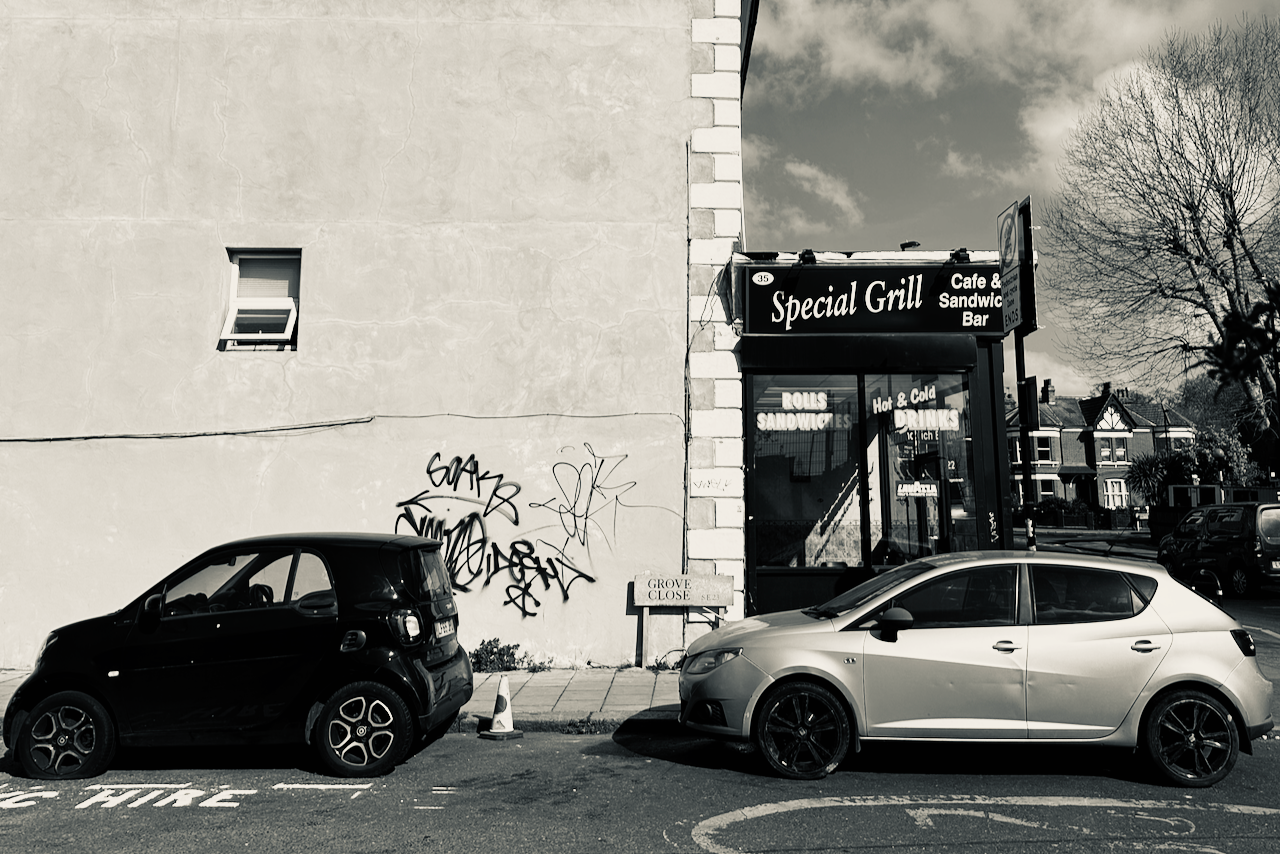
A sandwich bar in Forest Hill, London.
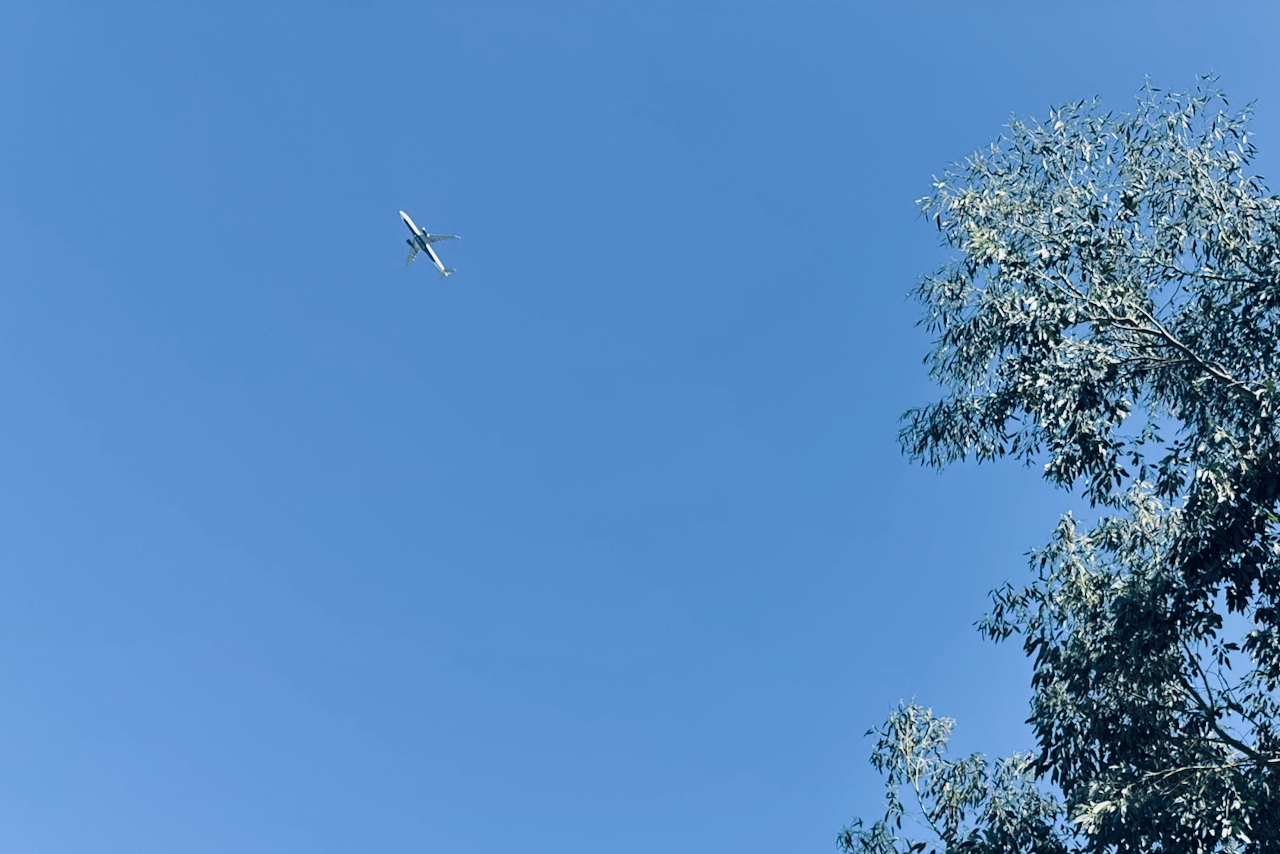
A plane flying above a eucalyptus tree in Catford, London.
These last few days I am obsessed with MJ Lenderman’s cover of Dancing in the Club, originally by indie pop band This Is Lorelei (AM / S). The original song is a jangly indie pop tune with a highly auto-tuned vocal that kind of turns me off, but with very heartfelt and heartbreaking lyrics that definitely speak to my general search for beauty and meaning in music. On his recent tour, which my cousin in Sydney was lucky enough to catch at the Opera House, MJ Lenderman, one of my favourite artists of the last couple of years, started performing a cover which he has now released a studio version of. I love this version so much, it brings an entirely new emotional dimension to the lyrics and the song, and it got me thinking about other cover versions which transcend their originals. Of course it means the original was never a bad song, just that someone else was able to get more emotion, something truer to the original vision, than the original performer. So here is a list of some of my favourite cover versions in this vein.
This Is Lorelei, MJ Lenderman - Dancing in the Club (MJ Lenderman Version)
Industrial Love Song (AM / S), by These New Puritans, featuring Caroline Polachek. I had somehow missed These New Puritans until a friend introduced them to me a couple of weeks ago, and in a classic case of the Baader-Meinhof phenomenon I am now seeing them everywhere. They have an album coming out this year and this is the lead single, featuring the ethereal voice of Caroline Polachek.
Quicksilver by Neal Stephenson. I don’t really read historical fiction, but it’s also not a particularly apt description for this very unique book, actually the first of a trilogy called The Baroque Cycle, which weaves a narrative around a huge cast of historical characters and several fictional ones, in seventeenth century Europe and colonial America.
Spirit of Eden by Talk Talk (album released in 1988; AM / S). I recently heard a very interesting episode of the Artworks programme on BBC Radio 4 about this highly influential album, which has been a favourite of mine for years now, which apparently was critically panned at the time, but later served as an inspiration for Radiohead’s Kid A. Both the album and the Artworks episode are well worth a listen.
Spring in London. Blue and white and pink and green. Air thick with pollen and vapour. A rush to learn the names of different birds and ornamental cherries. Spring is a wonderful time to have a newborn baby in the house, a sense of renewal and excitement and joy.
I am different this time around. I think it’s in no small part due to the power of walking, of commitment to a single thing day-in day-out and the way such a process grounds you. I have spent almost three months now walking my route through a few parks near my house, usually in the mornings. I have felt my body shed weight and gain fitness and strength.
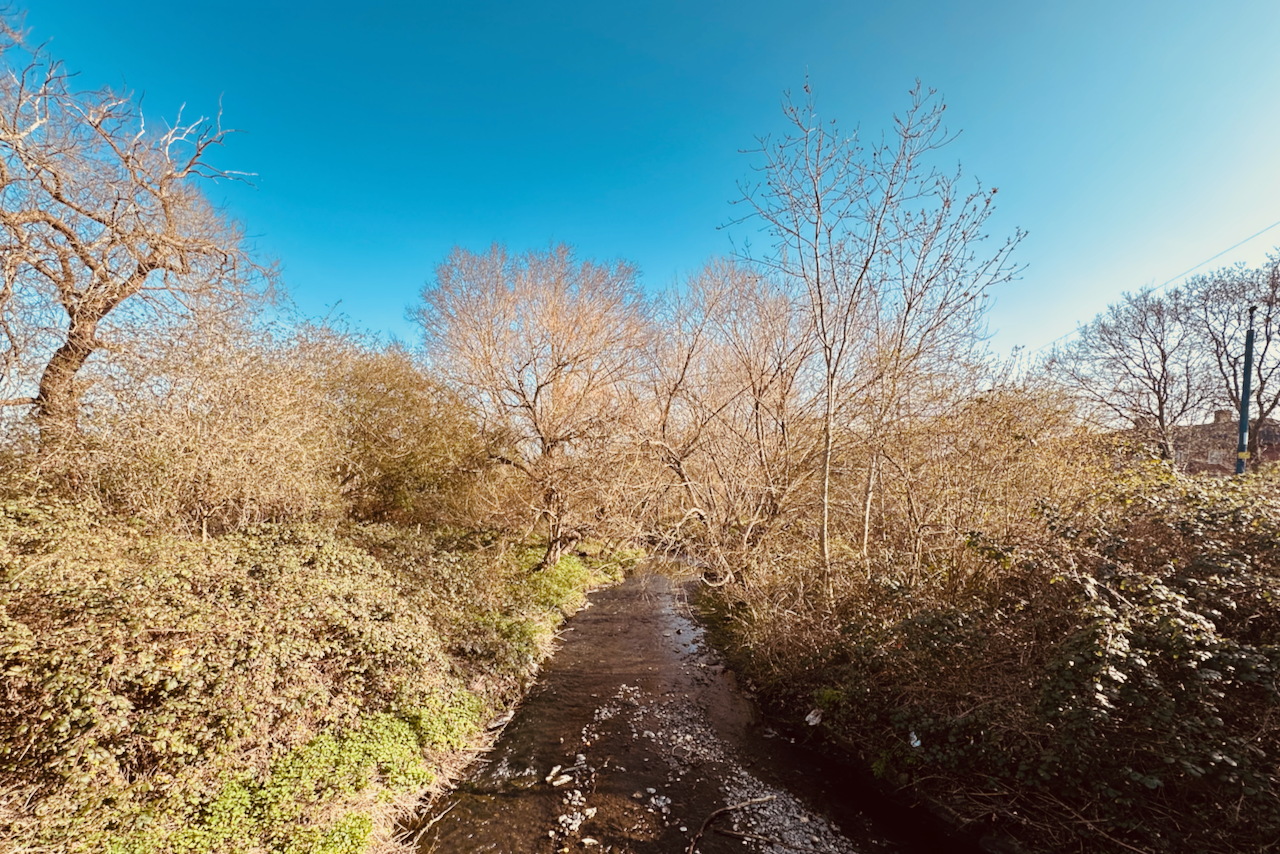
The Pool and Ravensbourne rivers, banked by concrete but at least surrounded by a strip of greenery a mile long which is my favourite part of the route, are flowing, awash in birdsong and blossom petals. When I began my walking regime, in the dead of winter and mostly as a startled response to post-Christmas gluttonous weight gain, there was frost on the dormant blackberry bushes most mornings. Today it is going to be 18 degrees and my sleeves are short.
I joined a walking group last year to try to meet some like-minded folks, inflicted with the same insanity as me, obsessed with the transformative and meditative power of the putting of one foot in front of the other tens of thousands of times. I was not particularly surprised to discover most of the folks were highly eccentric and lonely. Of the groups of twenty or thirty people I walked with almost all were single and I did not meet another walker with children.
I can’t stop thinking about two things these last few days: the Red Hand Files and the Maggie Smith poem I linked to yesterday. For myself and many others, personality is split between an outward facing individual who interacts with the world, forms relationships, receives data from stimuli, experiences things, and an inward-facing one who processes it all and searches and synthesises it for meaning and beauty. Cave so eloquently describes the delicate and often tragic balance that must be kept between these two halves of the self when one has a family. Smith’s inward facing self desperately cries out to exist, to be heard, to leave a trace in the physical world.
Everyone I encounter on my walk this morning is alone in their own world, most with headphones in, walking or running, soon to be back in their more complicated realities. There is one older couple, holding hands, showing their children the blossoms on FaceTime.
Photographs
A tree blossoming in the River Pool linear park in Catford, London.
Issue #318 of Nick Cave’s formidable Red Hand Files. If you haven’t encountered it before, it’s Cave’s newsletter where he answers letters from fans. He has become somewhat of a Jesus-like figure in recent years, dishing out hard-earned wisdom like this beautiful explanation of how the creative urge, however overpowering it may be, should never take precedence over a true connection with your family.
Poem Beginning With a Retweet by Maggie Smith, a wonderful life-affirming poem which was part of my inspiration for starting this new website.
Hello there and welcome to this website. I am already writing in two other places online. I have my main personal website, where I post technical stuff related to my career as a mathematician and software engineer, as well as my technical interests and projects in various long-form posts. I also have Mt Solitary, my “digital garden” where I host a subset of my extensive notes that I keep about all manner of things.
This site though, which I am calling angophora after my favourite tree in the world, the Sydney red gum, will hopefully be a slightly different outlet for me. I intend it to be a collection of small, hopefully meaningful, observations, comments and discussions about things I have thought about, noticed or done in the course of my day-to-day life, and a lot of links to interesting things I have discovered that I hope others can find interest and joy in.
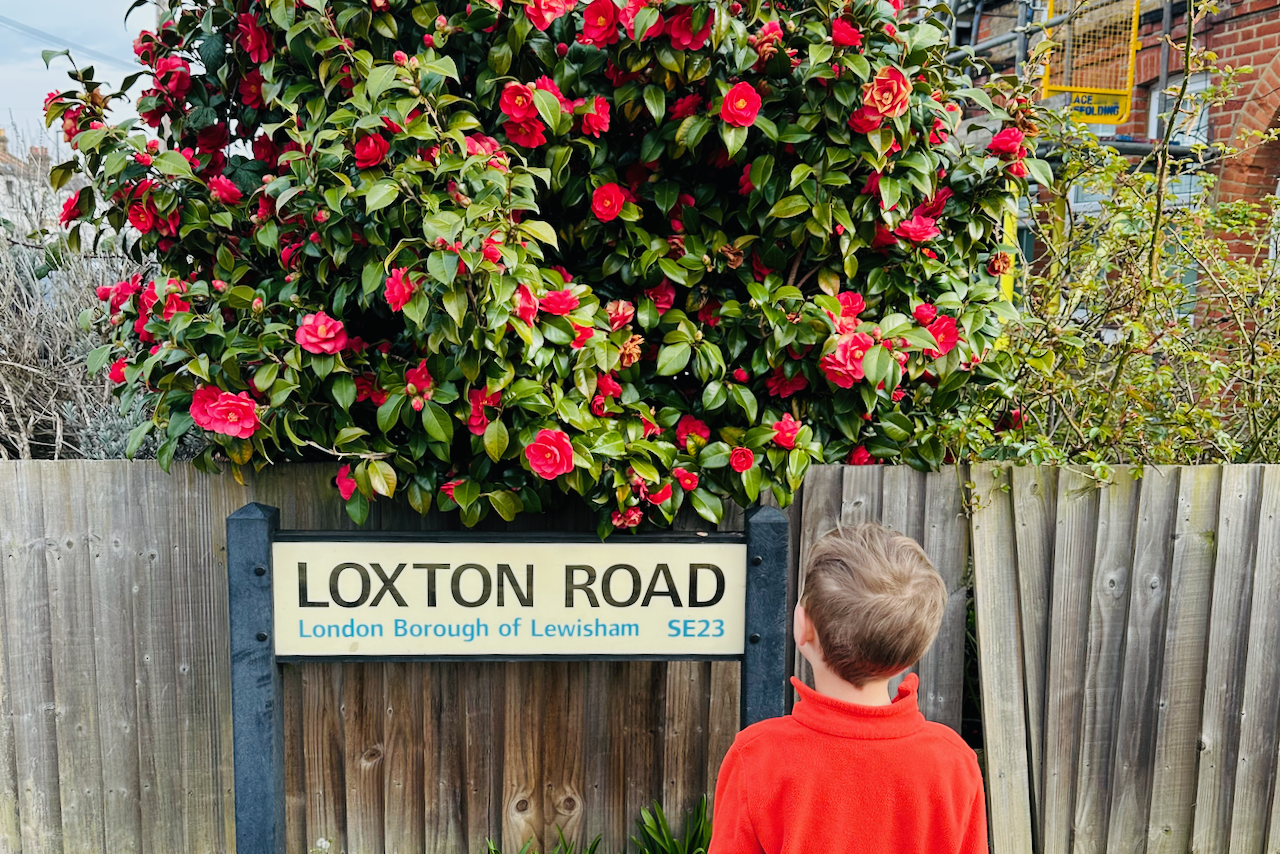
Some context about myself: I am a 36-year old father of three, with the most recent of those three born just this week, in our living room in south east London where I live with my family. As mentioned above, I have a highly technical day job as a programmer, and I trained as a mathematician. I have a huge range of interests but mostly I am interested in beauty, and all the ordinary and sublime places it can be found. Today’s example: my 5-year old son marvelling at a camellia bush which burst into flower this week, precisely on the meterological first day of spring.